
What has been the most significant change in consumer behavior in the last 10 years, and how has this impacted the way you think about marketing and communications?
The most significant shift in consumer behavior over the past decade has been the convergence of values and personalization. Consumers no longer just buy products – they buy alignment. They expect the brands they support to reflect their ethics, environmental consciousness, and sense of identity, while also delivering frictionless, personalized experiences that anticipate their needs.
This fusion of moral awareness and predictive precision has changed marketing’s role from persuasion to participation. We’re no longer in the business of “message pushing” but of meaning-making – helping brands earn the right to be in people’s lives. Today, successful communication feels less like storytelling to consumers and more like story-building with them, where empathy, transparency, and adaptive technology form the shared language.
AI & Corporate Reputation: New MAPS White Paper
AI isn’t just a technology issue today – it’s a reputational one. The latest MAPS white paper reveals how Fortune 500 companies are perceived around their use of AI, based on analysis of mainstream and social media over the past 12 months.

Share your email here for your copy.
How – if at all – do you see AI changing the insights function going forward?

AI has redefined – not just improved – the insights discipline. It’s turned research into a strategic nerve center. The real impact isn’t in automation; it’s in elevation.
We now have tools that can clean, synthesize, and simulate data at unprecedented speed. But the real opportunity lies in what comes after the analysis – interpreting human behavior with empathy and foresight. The best insights teams blend AI’s computational precision with human interpretive depth, ensuring that algorithms don’t just predict what people do, but help us understand why they do it. In this next era, the winning formula is not “AI versus human,” but AI amplified by human curiosity and empathy.
If you could wave a magic wand to fix one problem in marketing research, what would you do?
If I could fix one persistent flaw in marketing research, it would be the gap between measurement and meaning. We’ve built systems optimized for speed, but not always for sense-making. Dashboards multiply faster than understanding, and too often, we confuse motion with progress.

The deeper problem is that our analytical tools are excellent at counting people but struggle to understand the person. To close that gap, research design must reunite data fluency with human empathy – fusing behavioral signals with contextual understanding. When analytics meets anthropology, insights stop being a report and start becoming a roadmap.
The MAPS Newsletter
Sign up today for exclusive MAPS insights and interviews like this in your inbox as soon as they’re published.
What are the key skills and mindsets that are critical for success when leading insights teams today?

Leading insights teams today requires a three-lens mindset: strategic, technical, and human. You need the strategic clarity to link research to decisions that matter, the technical fluency to harness AI responsibly, and the emotional intelligence to build trust – both within the team and with stakeholders.
Curiosity remains the master skill. Not curiosity as a trait, but as a discipline – a willingness to question your own models, challenge data that confirms your biases, and continuously learn. The best teams operate at the intersection of storytelling and simulation, translating human truths into business actions that move both hearts and metrics.
Top MAPS Interviews
- Hear how Tracy Adams thinks brands can keep up with the ‘performative’ consumer.
- Discover what Ken Hughes thinks will happen to marketing and communications when consumers no longer make the decisions.
- Find out from Sable Mi how we protect authenticity in a world where everything can be faked.

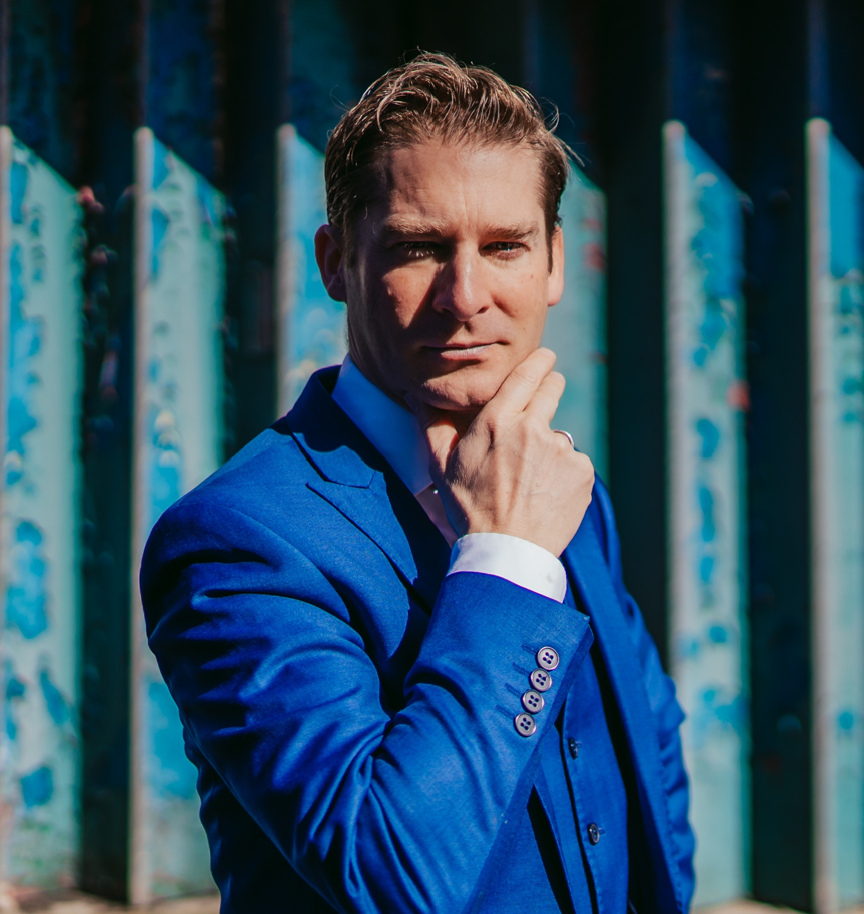

What has been the defining moment of your career so far, and why?

The defining moment in many research and analytics careers comes when Insights stops being a validation tool and becomes a decision catalyst. It’s that inflection point when a leadership team doesn’t ask, “What did the data say?” but instead says, “What do we understand now?”
That moment changes everything – it reframes research from being about numbers to being about narratives that move organizations. It’s when you realize your role is not to count consumers, but to decode humanity in motion – and to help your company respond with clarity and purpose.
How MAPS Can Help
Get in touch to share your objectives and our free MAPS Snapshot will help you understand how your brand is perceived on any of today’s fast-moving issues.

What one piece of advice would you share to those starting their career in marketing and communications?
Start with curiosity and humility. Learn how people make choices before you learn how to market to them. Build your technical skills – AI, analytics, digital storytelling – but never let the tools define you. The real power in marketing comes from understanding both data and drama: how numbers reveal patterns, and how stories give them meaning.

It is critical to spend self-reflective time understanding your own biases and foundational beliefs. New-to-you information will be filtered and processed through your core world view – which you cannot believe is necessarily shared with the rest of humanity. I experience far too much media that is built around the assumption of personal world views without sensitivity to alternative views – the result is frequently brand rejection – even if the potential customer cannot fully define the source of dissonance. Know yourself and take the step of documenting your point of view.
Above all, remember that communication isn’t about attention; it’s about understanding. The people who thrive in this field are those who can turn data into empathy and insights into direction. That’s what transforms a communicator into a strategist – and a marketer into a trusted advisor.
Top Insights
- DEI Backlash: Why Some Brands Survive and Others Get Burned
- Why AI Privacy Should Be Every Communications Leader’s Top Priority
- Amazon’s 5-Day Office Mandate: Will It Pay Off or Backfire?

Where to find Mack: