
How has the landscape of multicultural marketing evolved since you began your career, and what major shifts have you observed?
We’ve witnessed transformative shifts on two key fronts—consumer behavior and technology. Take Hispanic marketing, for example. Historically, it was primarily defined by language, with Univision and Telemundo shaping corporate perceptions of Hispanic consumers to serve their business (language-based) models. However, through extensive research over the last decade, I found that their language claims (i.e., Spanish is the best way to reach Hispanics) did not fully align with consumer realities. Instead, my work since 2015 has emphasized a nativity-based view (NBV), which considers whether a consumer is foreign-born or U.S.-born as a more accurate predictor of behavior (i.e., media usage).
The ad industry eventually recognized that they could engage both foreign-born and U.S.-born Hispanics—not just those who relied on Spanish-language media. Today, conversations revolve around bicultural and bilingual consumers, and the concept of cultural duality has emerged as a defining characteristic across segments, regardless of generational status. Also, the notion of targeting Hispanic “in-culture” is an oversimplification and lacks an empirical foundation.

When I began my career in the early ’90s, the digital landscape we take for granted today didn’t exist—there was no internet, mobile, social media, or digital channels to specifically target Hispanics and other multicultural consumers. That’s a fundamental shift. The rise of geo-targeting, big data, and advanced analytics has revolutionized how we reach and understand these audiences today, offering levels of precision and insight that were unimaginable 20 or 30 years ago.
However, despite these advancements, multicultural targeting in digital spaces still lags behind. Technology companies must prioritize solutions that allow brands to better understand who is engaging with their content—who is clicking on links, watching videos, and interacting with ads—not just in broad demographic terms but through the lens of ethnicity, category, and brand engagement. Without these insights, brands risk missing key opportunities to connect with an increasingly diverse and digitally active consumer base. More work is needed in this area, moving forward.

What lessons can we learn from brands that have successfully embraced a multicultural marketing strategy?
Simply put, brands that recognize the multicultural mainstream and build insights-driven strategies around these audiences are positioned to win.
Regardless of industry or category, the demographic reality is clear—America is multicultural, and the multicultural consumer is rapidly becoming the majority.
Companies that fail to acknowledge this shift or continue to operate under the outdated notion of a predominantly non-Hispanic white mainstream will face significant challenges in sustaining growth and relevance in the 21st century.
What challenges to DEI initiatives in corporate America might be expected in the current political climate – and how can these be pre-empted or resisted by major brands?
It is imperative for brands to remain steadfast in their commitment to a multicultural mainstream, even as anti-DEI rhetoric gains traction in today’s political discourse.

It is impossible to refute that diversity, equity, and inclusion have been deliberately weaponized and politicized, often serving as a tool for political leaders to sow division among Americans. The recent politics of DEI is likely to slow down brands, and economic progress in the US. Yet, the demographic realities of America are undeniable.
Diversity is not a fad; it is the foundation of the US marketplace in the 21st century. Brands that retreat in the face of these shifting political winds risk irrelevance, while those that continue to effectively engage and invest in diverse communities will be the ones that drive lasting growth.
Latest MAPS Interviews
- Discover why Xavier Sanchez de Carmona thinks marketers can get too distracted by the shiny new thing.
- Hear how Marcus Wohlsen went from FOMO to JOMO (!) on crypto…
- Find out how Rick Bruner thinks marketing leaders can start impacting climate change.


How do you envision the future of multicultural marketing developing in the US?
This is a great question. I envision a more equitable future where ad agencies, regardless of size or ownership structure, compete on equal footing for the same brands (clients).

The traditional divisions between general market, Hispanic, African American, and Asian agencies will fade, replaced by a model where expertise around the consumer and the brand is the key differentiator in reaching today’s diverse consumer base.
However, realizing this vision will require time and a dedicated effort from industry leaders to ensure that diverse perspectives are valued—across corporations, government agencies, and both private and public sector organizations. The marketplace is increasingly driven by multicultural consumers, and brands that develop a deep understanding of these audiences will define the future of marketing. In contrast, those that fail to evolve will struggle to stay relevant in a rapidly changing landscape. So, the gap between leaders and laggards will widen.
How MAPS Can Help
Get in touch to share your objectives and we can help you understand how your brand is perceived on any of today’s fast-moving issues. Our free MAPS Snapshot provides a clear view of your reputation compared to your competitors on a single fast-moving issue.

What has been the defining moment of your career, and why?
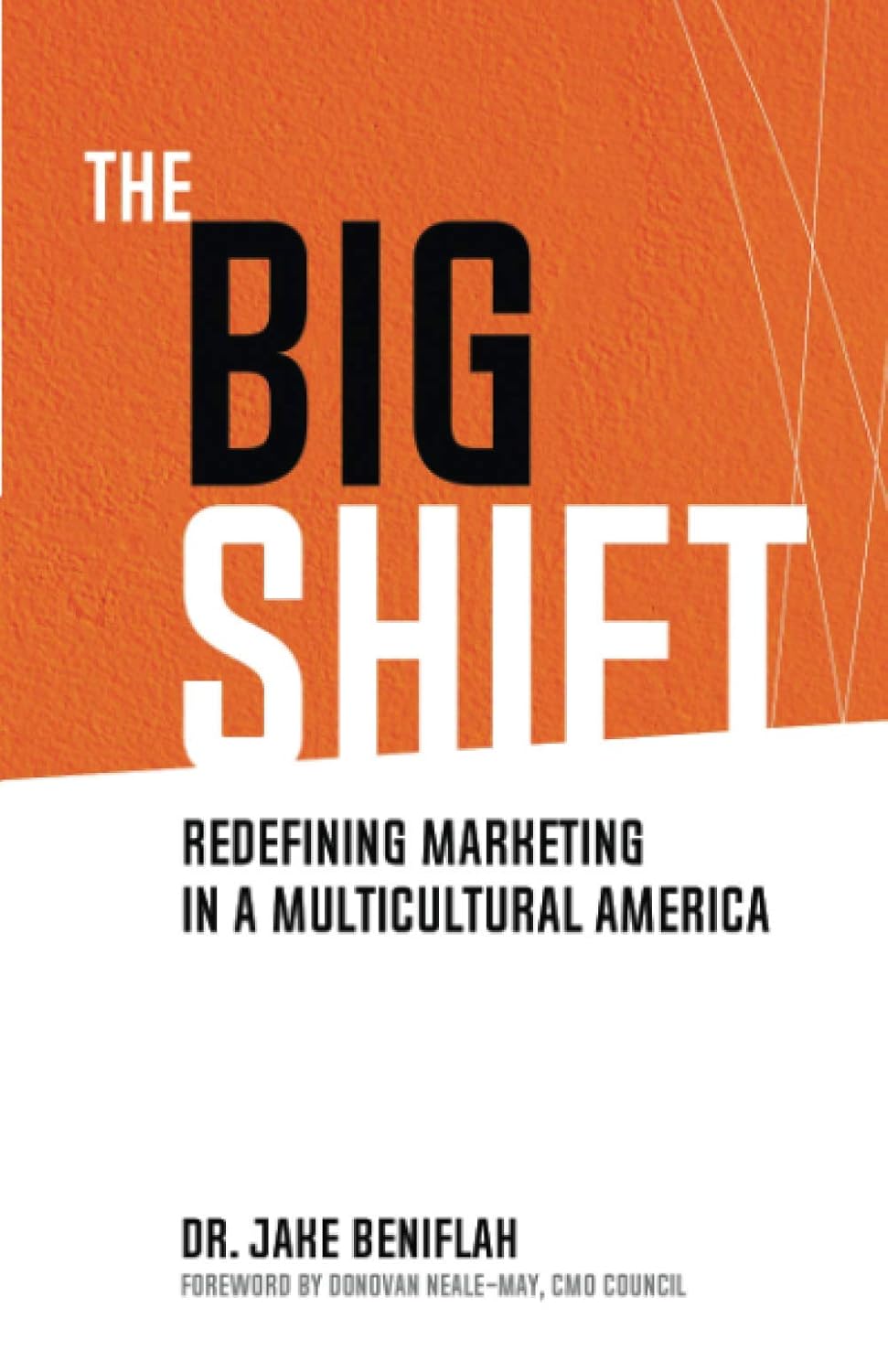
The defining moments of my career occurred at two pivotal inflection points. The first was in 2001 when I made the life-changing decision to pursue a doctoral degree, committing myself to deeper intellectual rigor. The second was when I chose to break away from industry conventions and forge an independent path—refusing to let outdated narratives dictate the future of marketing in a multicultural America.
I came to realize that many of my peers, despite their years of experience, were adhering to industry “rules” that failed to effectively with engage multicultural consumers. This realization crystallized during the pandemic, a time of upheaval and reflection for many of us, during which I authored The Big Shift: Redefining Marketing in a Multicultural America. This book challenges the status quo and presents a framework for businesses to thrive in an increasingly multicultural marketplace.
Top Insights
- Why do some DEI rollbacks spark backlash while others fly under the radar?
- What does the reaction to the Costco Wholesale and McDonald’s DEI announcements tell us about different generations of stakeholders?
- Which initiatives are moving the needle for the 20 companies with the strongest reputations around LGBTQ+ Rights?
Where to find Jake: