
What has been the most significant change in consumer behavior in the last 10 years, and how has it impacted the way you think about marketing and communications?
If I had to name the most significant change in consumer behavior over the past decade, it would be the impact of social media on how people see themselves today. I’d call it the normalization of reflexivity — the way individuals now observe, narrate, and curate their own lives through digital platforms. Technology didn’t just connect consumers; it taught them to view themselves as visible subjects in a data-driven world. Every post, purchase, and click has become part of an ongoing act of self-definition.
This shift has transformed marketing. A decade ago, brands reflected aspirations back to consumers; today, consumers use brands as mirrors to project their own. The marketplace has become a feedback loop of representation — we buy not only what we like, but what signals who we are, and who we wish to be seen as. This blurs traditional boundaries between consumption, communication, and identity, explaining why fandoms behave like social movements and everyday products carry moral and political weight.

From a sociological standpoint, this is the rise of the performative consumer. In an algorithmic environment where systems mirror our preferences back to us, people engage in performative participation — signaling values and affiliations through brands, hashtags, and memes. Marketing is no longer about persuasion; it’s about participating in the creation of meaning and culture.
For researchers, this redefines what “insight” means. Traditional segmentation assumed stable categories — demographics, psychographics, purchase intent — but those dissolve in real time. The same person behaves differently on TikTok, Reddit, or in a brand survey. Our task has expanded from measuring attitudes to understanding how people locate themselves within cultural narratives.

At the ARF, this perspective shapes how I approach marketing and advertising research. Our work remains grounded in quantitative, longitudinal, and experimental methods — ensuring rigor and replicability — but even the most sophisticated metrics must be interpreted within their social context. Across current initiatives — from validating attention measures and tracking privacy attitudes to analyzing AI adoption — we aim to ensure data reflects not just what consumers do, but the conditions under which they act and perceive.
Ultimately, the greatest behavioral change is epistemological. Consumers — and researchers — now live inside systems of reflection. Marketing today is about managing meaning in an age where everyone, consumer and brand alike, is both observer and observed.
AI & Corporate Reputation: New MAPS White Paper
AI isn’t just a technology issue today – it’s a reputational one. The latest MAPS white paper reveals how Fortune 500 companies are perceived around their use of AI, based on analysis of mainstream and social media over the past 12 months.

Share your email here for your copy.
How do you see AI transforming marcomms roles in the next few years?

AI is transforming marketing and communications, and at the ARF we’ve been focused on researching and interpreting these changes. In our view, AI shouldn’t replace creative or strategic roles — it should redefine what expertise means within them. The real shift is from execution to interpretation: from producing content to making sense of what automation produces. In the coming years, success in marcomms will depend less on how quickly we generate content or data, and more on how well we frame questions, contextualize information, and translate machine output into human relevance.
We see this most clearly in research. AI has moved from analysis to simulation. Synthetic data, digital twins, and language models are reconfiguring how we represent and imagine consumers. They enable experimentation at scale while challenging how we define reliability and truth. Ten years ago, we relied on observed behavior and self-report; now we can model how people might think, feel, or act. This offers immense potential but also raises new epistemic questions: What counts as “truth” when our data are probabilistic? How do we validate insight when both the question and the respondent may be algorithmically generated?
Findings from our Psych of GenAI series and the recent MSI/ARF Analytics & Forecasting conference highlight this tension. Synthetic respondents tend to regress toward the mean — hyper-rational, consistent, and often more optimistic than real people. That smoothness can aid prediction but risks erasing the very inconsistency that makes human behavior real. The challenge then isn’t only when to use synthetic data, but how to scale it responsibly — aligning its use with the complexity and consequence of our decisions.

This transformation should also reshape how we work. AI can enable a new form of augmented collaboration, where strategists, creatives, and analysts interpret AI-generated patterns together rather than in silos. The goal is not to automate judgment, but to elevate it — cultivating teams that can discern when a pattern is meaningful, when it reflects bias, and when it’s simply an artifact of the model. The differentiator won’t be access to AI, but the ability to apply critical insight with ethical and creative intelligence — turning machine output into understanding for humans.
The next generation of marcomms professionals will need to be multilingual across disciplines — part data scientist, part sociologist, part ethicist. They will be responsible not only for what campaigns say, but for how these systems construct reality and shape understanding. AI is forcing us to rethink how we know what we know about audiences — and the defining skill will be critical interpretation: transforming algorithmic possibility into insight that remains empirically grounded, contextually aware, and unmistakably human.
Where do you see marcomms leaders getting it right when it comes to AI, and where do they fall short?
The leaders getting AI right treat it not as a shortcut, but as a strategic capability that expands human judgment. They understand that AI’s value lies in pattern recognition, hypothesis generation, and creative augmentation — not in replacing human insight. The best teams experiment across workflows — from consumer research and media optimization to creative development — grounded in theory, methodological transparency, and clear validation standards.

At the ARF, we see this in companies using AI to accelerate testing and iteration while still benchmarking outcomes against empirical data. They pair synthetic insights with behavioral and attitudinal measures, ensuring what appears plausible algorithmically also holds true in lived experience. These organizations recognize that trust — within teams and with consumers — depends on understanding how the technology reasons, not just on the results it produces.
Where many fall short is in confusing automation for understanding. Too often, AI is deployed for efficiency — faster content, faster analytics — without questioning the assumptions built into models or the biases embedded in training data. AI can scale information, but only humans can assign meaning. The challenge for marcomms leaders is ensuring that the intelligence we automate remains connected to the empathy, ethics, and contextual awareness that make communication credible and effective.
We have a series of studies now fielding that examine AI’s role across the advertising and marketing ecosystem — not just as a technology, but as a system of decision-making. These projects ask fundamental questions: How are advertisers and agencies integrating AI into creative, measurement, and attribution workflows? What kinds of tools are they using — commercial platforms, synthetic data, or custom-built systems — and how confident are they in the results? Who within organizations is responsible for validation, oversight, and ethics? How is bias within AI systems overcome? And as AI-generated personas and automated analytics become more common, how do we define reliability, originality, and accountability?

The rationale behind this work is to understand not simply what AI does, but how people work with it — where it strengthens interpretation and where it risks substituting automation for judgment. These are the questions that will determine whether AI enhances creativity and insight or merely standardizes them. Our goal is to help the industry develop frameworks for responsible adoption, so that as technology evolves, human judgment remains at the center of marketing and communications.
The leaders who will advance the field are the ones combining experimentation with evidence and innovation with integrity. They see AI not as an oracle but as a collaborator — one that demands as much critical thinking as technical skill. Those are the leaders who will get their organizations to turn artificial intelligence into applied intelligence — and that’s where the real advantage will lie.
The MAPS Newsletter
Sign up today for exclusive MAPS insights and interviews like this in your inbox as soon as they’re published.
Noting your work on memory and ‘exchange rates’ – how can a corporation make their purpose-driven efforts feel real rather than transactional?
Purpose-driven marketing feels real when it is practiced as continuity rather than reaction — when a company’s moral commitments are not expressed as isolated campaigns but as the visible extension of a longer narrative. Audiences can sense when purpose is episodic, opportunistic, or designed for optics. What gives it credibility is not the intensity of the statement, but the consistency of the behavior that supports it.

In Digital Reflections: Memory as Currency in Advertising for Social Change (forthcoming, Palgrave Macmillan), I explore one of the central reasons purpose can feel continuous rather than performative: collective memory. I argue that memory operates as a form of currency — a tradable resource that carries symbolic, emotional, and moral value. Accelerated and amplified in the digital era, the past is a site of exchange: brands and advertisers use collective memory both to anchor products in familiarity and to signal alignment with broader social values. In drawing on shared historical narratives — national, cultural, or emotional — they tap into reservoirs of meaning that audiences already trust.
But the same mechanism that can enable social good can also produce moral fatigue or distrust when misused. The difference lies in authenticity, which in this context means fit — the degree of coherence between a brand’s identity, its chosen cause, and the cultural space in which it speaks. The strongest purpose-driven efforts demonstrate alignment at every level: between the brand and the message, the messenger and the medium, and the platform and the audience. Authenticity is not a property of tone but of proportion — a match between intention, capacity, and history. When these elements are in sync, purpose feels less like marketing and more like meaning.
Top MAPS Interviews
- Hear what Beth Stellato thinks the pandemic taught top communicators about speed, transparency, and knowing what ‘good enough’ looks like.
- Discover what Ken Hughes thinks will happen to marketing and communications when consumers no longer make the decisions.
- Find out from Sable Mi how we protect authenticity in a world where everything can be faked.

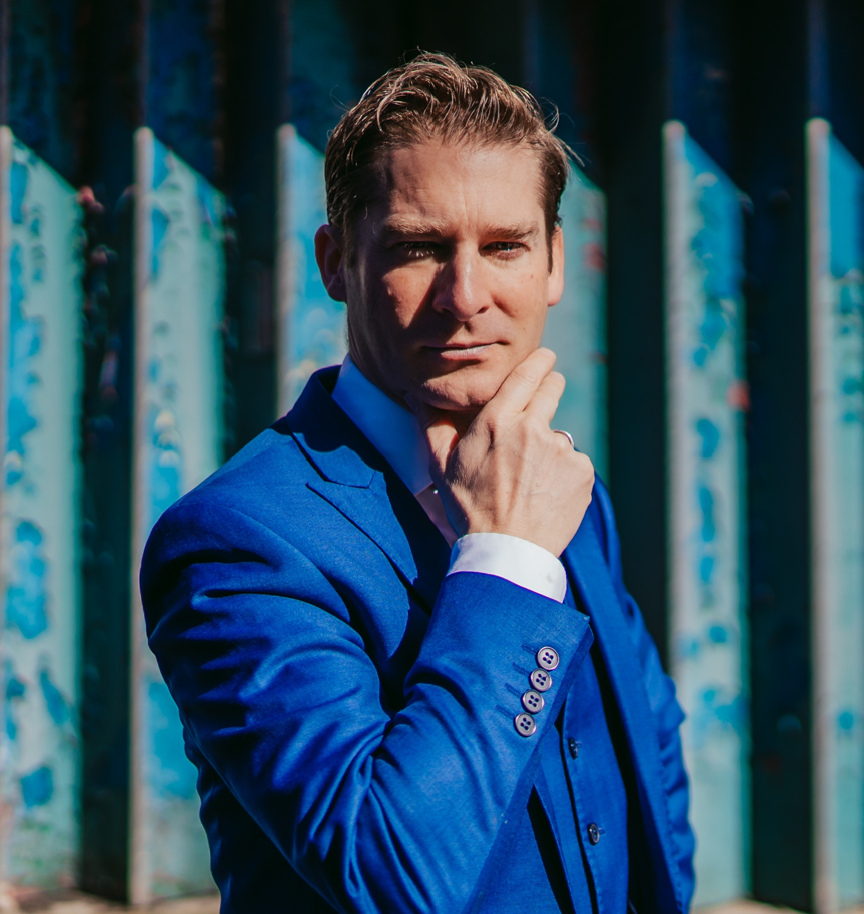

What has been the defining moment of your career, and why?
There are two defining moments that have shaped how I see my work and, really, how I see the world.
The first was when I began studying sociology during my PhD. It opened my eyes to the structures, meanings, and cultural systems that shape everyday life — and to the idea that no behavior, no choice, exists outside of context. Sociology changed the way I interpret the world. It made me realize that research is not just about gathering data; it’s about understanding how people create and inhabit meaning. I’ve often said that everyone should study sociology, because it teaches you to see society as both the backdrop and the outcome of human action — something that touches all of us, whether we realize it or not.
The second moment was my shift from academia into industry. That transition allowed me to bring those sociological questions into a more applied, dynamic setting — one that deals directly with the most pressing challenges in marketing and advertising research. At the ARF, I’ve been able to work in an environment that’s both scientific and practical: rigorous in method, but responsive to change. It’s research that not only advances knowledge but informs real-world decisions — where theory meets evidence, and evidence meets impact.
Those two moments continue to define my perspective. And I hope there will be more moments like these ahead: moments that challenge how I think, expand what research can do, and keep reminding me why understanding meaning still matters.
How MAPS Can Help
Get in touch to share your objectives and our free MAPS Snapshot will help you understand how your brand is perceived on any of today’s fast-moving issues.

What one piece of advice would you share to those starting their career in marketing and communications?
Learn to see marketing and communications not just as industries, but as ways of understanding people. We study audiences, attention, and persuasion — but at its core, this work is about interpretation: how meaning circulates, how culture changes, and how communication shapes societal behavior.

My advice is to stay curious about why things matter, not just how they perform. The metrics will always evolve, the platforms will always change — but the human questions endure. Ask what values are being expressed, what assumptions are built into your data, and whose stories are being amplified or left out.
At the same time, keep your standards high. The best researchers and strategists I know are both imaginative and empirical — they respect evidence but never stop questioning it. That combination of rigor and reflection is what keeps the field moving forward.
If you can hold onto that balance — curiosity and discipline, empathy and analysis — you’ll never just be tracking trends; you’ll be helping to explain the world as it changes.
Top Insights
- DEI Backlash: Why Some Brands Survive and Others Get Burned
- Why AI Privacy Should Be Every Communications Leader’s Top Priority
- Amazon’s 5-Day Office Mandate: Will It Pay Off or Backfire?

Where to find Tracy: