What has been the most significant change in consumer behavior in the last ten years, and how has the impacted the way you think about marketing and communications?
One change is technology. As a cyber behavioralist – which is a relatively new field of study in social sciences – I see that most people assume that digital anthropology or cyber-behaviouralism just studies the behaviours that people exhibit when using technology. But actually, the field of study is more interested in how the use of technology influences our real world expectations for a consumer. We talk about the ‘Tinderization’ of society. That’s the idea of easy, come, easy go, swipe left, swipe right, get what you want, instantly match. That has an implication for how you see the world in terms of products, services, employment, relationships, lots of things. What we’re seeing in the last ten years is a one-click, one-swipe world: instant, lower attention spans, desires for instant everything, everything comes to me.
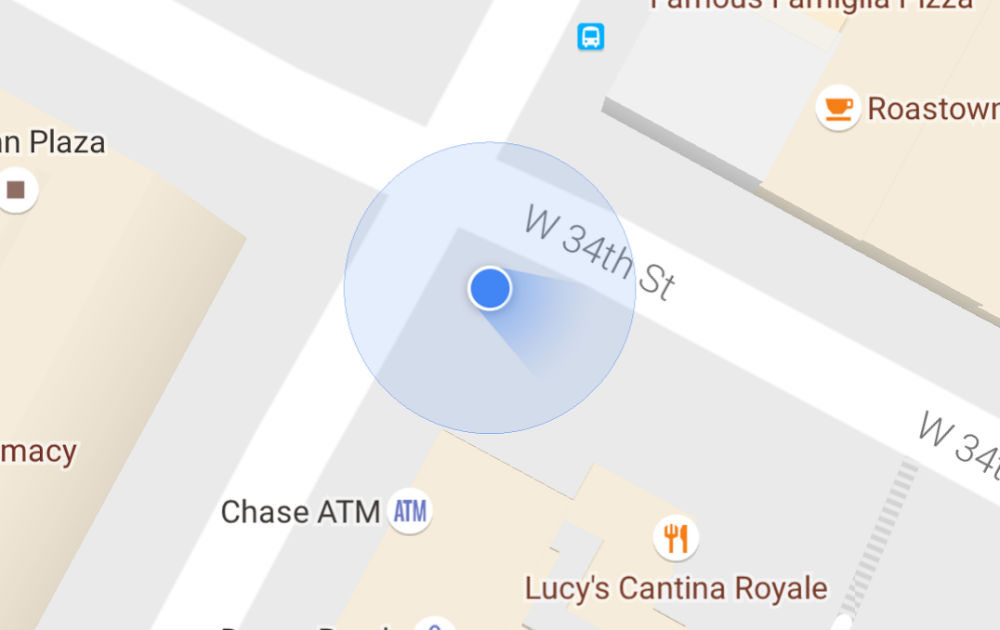
I have this metaphor about the ‘blue dot consumer;’ the old way was the map, where you had to do all the work, find out where you were, find out where you were going with an old paper map, plan the route, check the route as you drove. Today of course the blue dot of Google sits there right in the center of your frame at all times. You’re put at the center of the frame, and that was a big shift from a consumer’s point of view, because it challenged the business models.
Introducing the MAPS Reputation Index
Reputation rankings are everywhere. But in most cases, the ranking is the point. With the MAPS Reputation Index, it’s just the start. We’re interested in why certain companies have a strong reputation – and sharing these lessons with our clients.

Click here to access the index. If you’d like to see how your company measures up – for free – share your email below and we’ll be in touch.
The whole direct to consumer concept comes out of that metaphor, where rather than me going to supermarket, my groceries get delivered to me; rather than me going to the doctor, I sit at home and I do a virtual consultation, the doctor comes to me; rather than go to the restaurant, I can use Just Eat and it comes to me.
The customer at the center is probably one of the biggest shifts in consumer expectations, and while lots of companies talk about “oh, customer at the center,” what’s actually happening from a customer expectation point of view is is they’re now on the top diving board. Think about the three diving boards in the Olympics: the bottom one, the middle one, and the scary top one. That’s where consumers are in now in terms of their expectations. That’s a huge shift in terms of consumer expectations over the last 10 years.
As each generation comes along, GenZ, Gen Alpha, and now Gen Beta being born, they’re being born into a fundamentally different world, of AI, quantum computing, humanoid robotics, and the way marketing and communications have to shift is that we have to move much more strongly into a kind of conversational economy – as opposed to shouting at people.

The sad thing about social media channels, for instance, is that we had an opportunity to converse one on one with consumers, whereas actually most brands still use a megaphone approach, even with those channels, and just talk about their brand, their products. They’re just shouting at the market, as opposed to actually having a conversation. I think the significant change coming with AI, of course, is that we we’re gonna be able to hyperpersonalize those conversations in marketing. If you told someone in the 1950s that you would be able to talk to every single customer in the entire world on a one on one basis – you’d have the scale to do that, you’d have a computer in your pocket – and not only could you do that, but you could do with depth empathy, compassion using the data that you have on them, they’d wet their trousers. And we have that reality, now.
How do you foresee AI impacting the way consumers make decisions?
That’s a really fascinating space, because actually it’s a little bit of a crystal ball at the moment. We talk about B2B, B2C, but we don’t talk much about as “B2M” – business to machine. As humans, we don’t really like making decisions, we try and avoid making decisions if we can. We’re quite happy if someone else makes the decision for us, particularly for low-involvement products like groceries, utility bills, car insurance. It’s always too much hassle to compare, and the entire industry is built on that basis: that people won’t change away because it’s too too annoying. We make it difficult for them to compare policies and pricing.

I think with agent AI what will happen is that you will hand over that decision-making to your agent; your personal agent will go off and look for the best skiing holiday for you and your family. It knows there are four of you, it knows you like self-catering, it knows you want a short one-hour transfer from the airport. It knows you. And so when you set it off to do a task, and it gets it slightly wrong and you correct it, after six or eight months, it’ll know you so intimately that you’ll be able to say “book me a summer holiday please, for the first two weeks in July.” And that’s all you’ll say, because it knows you like to scuba dive and snorkel, it knows you like the Greek islands. It might ask you one or two questions to clarify things, and then it’ll automatically book your flights, your hotel, your car hire, it’ll book your activities – it’ll just do everything for you. So basically it’ll take over the decision-making.
And that, from a marketing point of view, is terrifying, because in the study of marketing – and marketing, remember, as a social science is also quite a young discipline, not even 100 years old as as a management discipline – we have always used various things to influence consumers, whether that’s clever advertising, whether it’s a snappy jingle, whether it’s aspirational imagery. But what happens when there’s no consumer, no human involved in the decision-making process? What happens when the AI agents are running the show and are making the decisions? Unless you actually called for a very specific product or service or brand, the agent AI will just find the one that best meets your needs. Today you can buy your way up the Google list for a search – and obviously there’ll be a new version of that in AI as well – but a lot of us will be using to paid AI agents to get away from advertising. It’s a very interesting space, yet to be really explored fully but from a marketing point of view, you could argue it’s both terrifying because we lose control of influencing humans, and also tremendously exciting as it allows us to reach a whole new market in different ways, with different channels and different technologies.

It’s still a crystal ball in terms of how it’ll impact consumers and their decision-making. But certainly, the interesting about cyber behavioralism and the rise of AI is that humans to date have generally typed something into the internet, looking for a product and you get multiple answers. That’s the way search engines worked – you’d get the first page of Google, and there are ten options there. You might skip the first three because they’re sponsored, you might delve down into the actual results, or you might use the sponsored ones, but you’re making calls very quickly in microseconds, scanning the various inputs and choosing the ones that’s best for you. In AI, in open source AI or ChatGPT, you tend to type in the question or prompt and you get one answer. Just one, and you accept it. And often it’s wrong – the technology is so young, so you just accept it as the answer – and that’s very interesting. It’s a little bit like the Gen Z and Gen Alpha kids opening TikTok and seeing a piece of fake news and just accepting it, because TikTok said it. “It’s true, because it’s on TikTok.” One source is taken as the answer, and in cyber behavioralism we’re going deeper and deeper into that place – “AI said it, so it must be true.” Consumer decision-making is going to become faster and blunter, and we just accept what we’re given. It’s a very interesting space.
The MAPS Newsletter
Sign up today for exclusive MAPS insights and interviews like this in your inbox as soon as they’re published.
How would you characterize the difference between a company that has fully embraced a the notion of customer centricity, and one that is earlier on that journey – and do you see any differences by sector?

The second part I’ll take first: I certainly do see differences by sector. There are industries like healthcare, or financial services, that are traditionally quite product- and policy-driven. They’re not consumer- and people-driven. In healthcare, one of the biggest pieces of feedback you get from patient experience is “I entered the hospital and I disappeared as a person.” The plastic bracelet gets snapped on your wrist and you become a date of birth. So when we lead out with policy, our product or operations, logistics, and we don’t lead out with the person and the person’s needs, then we’re in trouble. There are certain industries that are definitely behind the curve on the customer centricity piece, and they’re aware of that, and they’re working hard to put themselves back in the center. The startups that do well, of course, in those areas are the ones that do put the customer at the center.
I think the difference in a company that fully embraces customer centricity is obvious because it comes from the top. It comes from the CEO all the way down through the various layers of management. You can’t really have a customer-centric philosophy running in an organization if you don’t have empowered employees; you don’t get empowered employees and a strong employee experience unless that’s set from the very top. So that’s very apparent: you can see in companies where it’s just lip service and it’s something that lives in a PowerPoint slide, or written on a wall, but isn’t being lived as a value in every layer of the company.
Latest MAPS Interviews
- Hear what David Shiffman thinks is the one question every CMO should ask themselves.
- Discover which brand’s approach to marketing and communications still inspires Orli LeWinter.
- Find out what Jake Beniflah thinks the biggest mistake is that brands make when trying to engage multicultural audiences.



Looking into the future, which fast moving issues and consumer dynamics will marketing and communication leaders need to be aware of?

Well, that I can’t answer because that’s a true crystal ball question! Who knows what will happen in terms of the issues of consumer! If I am to predict what’s going to happen, we’re obviously going to head into a much more digital society than we already have, in the next five years. We’re going to be getting a far more deeper dive on our digital existence – which isn’t necessarily a good thing for society – but I think we need to go through that to come on the other side of it.
From a consumer marketing and communications perspective, I think the work that we’re doing with quantum computing is probably the most fascinating part. We’re not really talking about it much because AI is so exciting, it’s more practical and we can play with our generative AI every day: we can make images, and we can get it to edit our essays and so on. But when you think about the power of quantum – and really the numbers become very crazy very quickly – the reach of quantum computing and its capabilities just blow every other kind of processing computer out of the water. When you think about that from a marketing and data manipulation point of view, when you take what we can do with AI today – and let’s face it the AI is kind of 1.0, 2.0 at the moment, imagine AI 4.0 or 5.0 – then imagine that powered by quantum computing, where the speed and the capabilities of manipulating data are just off the charts. That idea of hyper-personalization and predictive marketing – in terms of predicting the patterns of the data, what the consumer may or may not need and then delivering that to them before they are even aware that they needed it – all that becomes really core to what marketing and and communications will be about. It’s definitely be very exciting space for the next five years as the tech evolves, but of course, it takes to a human to get creative in terms of how we’re going to connect best with the consumer.
What has been the defining moment of your career, and why?

That’s a great question. From a performance point of view, large audiences are fun. I was on the stage recently in X4 with Qualtrics in Salt Lake City; that’s an event that’s been keynoted by Barack Obama, and Richard Branson, so it’s really honor to be asked to keynote events like that. You’ve got an audience of 6,000 people, and they’re all customer experience, marketing – passionate people. That’s the interesting thing – when you put the same type of people in the room who have a genuine interest in customer-centricity and care. I was on the stage four times over the two days, and so we had a great journey together as an audience, and you feel that as a performer, sometimes when the audience is really, really genuinely interested in the subject. While a keynote is obviously one-directional piece of conversation, afterwards you get a sensation on social media that you connected, and that was really a truly great experience.
But the defining moment of my career, I don’t think I’ve had it yet! Let’s hope that’s coming. Certainly deciding to shift my focus away from the agency that I was running – I was running my own boutique insights agency – and the shift to decide to speak professionally for a living to spend my time motivating and inspiring others in the customer experience marketing and branding space rather than delivering projects and doing consultancy work with clients, that shift of gear, has connected me to my purpose more. To inspire and empower people to reach their best selves is what I do for a living, particularly in the marketing, branding and customer experience space, so when I’m on stage doing that or with workshops or masterclasses with people, that’s where I’m happiest. So I think the defining moment for me was stepping away from consulting an agency and leaning into motivation, speaking, and performing.
How MAPS Can Help
Get in touch to share your objectives and our free MAPS Snapshot will help you understand how your brand is perceived on any of today’s fast-moving issues.

What one piece of advice would you share to those start in their career in marketing communications?
This one is actually quite easy. Too much focus in marketing and comms is put on the data science, theories, marketing – it’s all very interesting, and I’ve taught marketing modules in universities over the years also – but my impression of people who enter the marketing field is that the weakest part is understanding social science.

Remember, marketing as a field of study is one of the social sciences. I think the weak spots that people have, if they’re starting their careers, are around behavioral sciences. Have a look at psychology, and sociology, and anthropology and cyber-behavioralism. Anything ending in “ology” is good for you to study: how do people work? How do people’s brains work? How are their needs met? The psychology of consumption, the psychology of the purchase, and anything that helps you understand people. Look for inspiration outside of management, even – I think that really sets you up as a as a marketer to truly understand what we’re trying to do here.
If connection is everything from a branding point of view, then to connect with the human means that we need to understand them and their desires deeply. It ties back to the work of Edward Bernays, Freud’s nephew, who is seen as one of the founders of marketing in the US, having taken his uncle’s work and thought “well, okay, there’s more going on here in the human mind; let’s not be so functional in terms of how we sell product. Let’s lean into aspiration, let’s lean into emotions like guilt, and fear, and anger and harness all those to sell more.” I think in marketing, dialing up your understanding of social science, looking for books, podcasts, talks in that area, sets you up to be a better marketeer.
Top Insights
- DEI Backlash: Why Some Brands Survive and Others Get Burned
- Why AI Privacy Should Be Every Communications Leader’s Top Priority
- Amazon’s 5-Day Office Mandate: Will It Pay Off or Backfire?
