
What has been the most significant change in consumer behavior in the last 10 years, and how has it impacted the way you think about marketing and communications?
There have been a few pivotal changes in consumer behavior since the past decade, such as the proliferation of DWOM (digital word of mouth), mobile consumerism, etc. But the one change that excites me the most is the fact that more and more consumers are not only interested now in “value”, but instead are interested in “values.” That one “s” makes all the difference in the world. Basically this means that consumers are not just buying the product/offering/brand for what it can do well and based on cost, but also whether that product/brand aligns with what is meaningful to them and their values.
Because of this, I view brand positioning, marketing, and communication more from a heart-centered perspective first, vs. through the lens of traditional rational attributes. That’s why I co-created Purpose Hive, centered around the notion that companies and organizations resonate with the awakened customer through values-driven positioning – which creates positive change and profitability, simultaneously.
Introducing the MAPS Reputation Index
Reputation rankings are everywhere. But in most cases, the ranking is the point. With the MAPS Reputation Index, it’s just the start. We’re interested in why certain companies have a strong reputation – and sharing these lessons with our clients.

Click here to access the index. If you’d like to see how your company measures up – for free – share your email below and we’ll be in touch.
How has your career led to your current focus – brand purpose?

I’ve been through hills and valleys in my career journey with the aim of understanding my purpose, and then how to align to it. Through curiosity, exploration, and experimentation, I’ve come to recognize that I love to use commerce as a force to help people connect with their humanity and/or the environment. And having been a brand positioning consultant for many years, I understood the huge potentiality of a brand in how it can emanate, manifest, and viscerally affect people if done with intentionality, humanness, and empathy. Brand purpose sits at the center of this approach.
Is there a tension between corporate purpose and short-term stakeholder pressure – and if so, how can this be overcome?

Yes, corporate purpose can have a bad rap in the context of short-term returns. This is one of the reasons why corporations distance themselves from a core purpose-driven strategy. On the flip side, implementing and operationalizing a strong and resonant corporate purpose, which stems from genuine integrity, can gain notable traction over time and drive success in the long-term. That said, one effective way to see short-term results as it pertains to corporate purpose is to focus on changes in consumer perception, through mixed media tracking that measures shifts in sentiment, awareness, and engagement over time. By showing incremental consumer perception and engagement gains short-term, we see that a corporation becomes more known by the consumer to be purposeful, and then valued by the consumer, eventually leading to growth and greater dividends long-term with resiliency.
The MAPS Newsletter
Sign up today for exclusive MAPS insights and interviews like this in your inbox as soon as they’re published.
Where do communications and marketing leaders get it right – and where do they fall short – when it comes to purpose?

First, let’s take a step back and define what we mean when we say “purpose.” In the 21st century, purpose is what an organization or brand focuses on to create positive change for people and/or the planet that enables them to also be profitable – simultaneously. So purpose includes sustainability, DEI, biodiversity, equality, ethical AI, rural development, financial inclusion, etc.
When it comes to communications leaders and purpose/sustainability, one area that they are falling short is that they have a tendency to focus primarily on the science and bare-bones facts/data (e.g., reporting focused on carbon emissions etc.) vs. showcasing their data through compelling storytelling in a way that is meaningful and/or personal to their audience.
As for marketing leaders, they need to recognize that their audiences are changing before their eyes – and that their brand positioning need to follow suit in accordance. We are in age where customers are values-driven: 64% of global consumers make brand choices based on their values. Also, Gen Z – already being a staunch advocate of purpose-driven brands – will dominate the market with spending power of $12 trillion by the year 2030. And 2030 is right around the corner. The sooner marketers recognize this opportunity and position their brand to be values-driven, the more brand growth and loyalty they will experience.
Latest MAPS Interviews
- Hear what David Shiffman thinks is the one question every CMO should ask themselves.
- Discover which brand’s approach to marketing and communications still inspires Orli LeWinter.
- Find out what Jake Beniflah thinks the biggest mistake is that brands make when trying to engage multicultural audiences.



What’s one mindset shift you wish the C-suite would make when it comes to embedding purpose across the business?
I recognize and understand that we are currently living in a never normal world where the C-suite is under great pressure to meet their quarterly numbers and stakeholder demands. AND I still wish that more C-suites would use a greater portion of their time, efforts, and investment with an eye on the long-term by focusing on purposeful corporate brand building and/or purposeful brand building. It’s a growth magnet not just for the company, but also to draw consumers in and retain/attract talent.

Also, to reap the most benefit from purpose, a corporation has to embed it throughout the business. So purpose should not just be big words in a visually-appealing brand slide deck, but actually be integrated across departments, from HR, innovation, marketing, comms, sustainability, etc. Purpose becomes the core strategy of running a business. It’s not an add-on, it’s the thing that links everything together.
What has been the defining moment of your career, and why?
I have two career defining moments that come to mind. First, right after finishing a Masters in Occupational & Environmental Health, I became a public health officer. Through my interactions with the public, I had an epiphany: for me, the communication of science is more important than the science itself. This realization surfaced by recognizing that providing information in a human way that connected with the public’s concerns, and making them feel seen, was essential for my role and how I show up in the world.
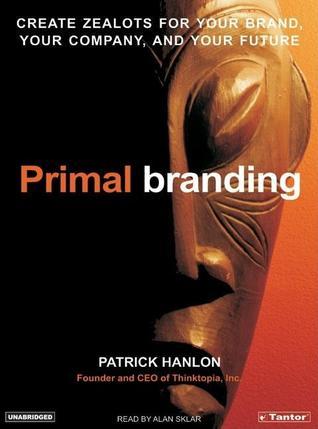
The second defining moment was when I quit my job in digital strategy at an NYC agency and ventured out as an independent consultant. I started organically diving deep in all things branding and brand positioning – letting my curiosity and energy guide me. After reading the brilliant book by Patrick Hanlon “Primal Branding,” it was official – my whole being knew that this discipline is my calling, because I finally viscerally understood that branding is really about understanding and connecting with human beings and human nature. I’ve been hooked ever since.
How MAPS Can Help
Get in touch to share your objectives and our free MAPS Snapshot will help you understand how your brand is perceived on any of today’s fast-moving issues.

What one piece of advice would you share to those start in their career in marketing communications?

Know that at the end of the day, marketing and communications is essentially about human beings. Your “customer” is not an alien or an abstract puzzle, they are a living and breathing person just like you, with dreams, fears, yearnings, and a BS radar system that can detect inauthenticity a mile away.
So be curious about what makes you tick, through self-reflection and being able to empathize with others; think about what makes other people tick…not just their brains, but their hearts as well. And start from there. Learn about human nature and human behavior and use the power of marketing and communications to elevate human beings and the world we live in, in a positive way.
Top Insights
- DEI Backlash: Why Some Brands Survive and Others Get Burned
- Why AI Privacy Should Be Every Communications Leader’s Top Priority
- Amazon’s 5-Day Office Mandate: Will It Pay Off or Backfire?
