
How has the notion of inclusion evolved since you began your career, and what major shifts have you observed?
I often joke that I’m a “one-trick pony” because my professional focus has been the inclusion of LGBTQ+ people, rooted in my own experience of marginalization and “exile”. When I started my career at the World Bank more than two decades ago, LGBTQ+ inclusion was virtually absent from conversations in international development and corporate governance. In the following years, it became little more than a checkbox: benefits parity, rainbow flags in June, and a nondiscrimination policy. Even that was controversial at times.
I was the head of their employee resource group around 2010, and eventually, I began to argue that LGBTQ+ equality had to mean economic inclusion – that we belonged in the development agenda. The reaction, even from some gay colleagues, was shockingly hostile. They felt I was trivializing the work of a serious, macroeconomic institution. We were tackling global poverty, and here I was, bringing up sex and Hijras. My fight was to make LGBTQ+ inclusion a legitimate topic, and for a while, it worked. Around 2014, the Bank started to understand that inclusion must be structural, requiring investment in LGBTQ+ economic empowerment. The shift was from symbolic visibility to systems change.

But that progress is now unraveling. Scott Bessent, a gay man himself, thinly alluded to this work when he said this week that the World Bank was engaged in “mission creep”. LGBTQ+ equality is not mission creep; it is a serious development topic. The conversation has once again become a punchline. That was the subject of a recent piece I wrote (“A Queer Life”) – about how we’re back to being dismissed, ridiculed, and erased. And we have to be careful not to buy into this narrative.
Free Snapshot Report
Want to know how your brand is seen on a specific fast-moving issue? Drop your email here and we’ll set up a quick call to walk you through a free, custom Snapshot.
What further challenges to inclusion in the corporate world might be expected in the current political climate, and how can these be pre-empted or resisted by major brands?
We are seeing the rise of a coordinated global backlash: a coalition of illiberal regimes and reactionary political movements that view LGBTQ+ equality as expendable and potentially a political tool. In the U.S., inclusion is under attack under the guise of “anti-woke” populism. Elsewhere, it’s criminalized like in Russia or erased like in China.
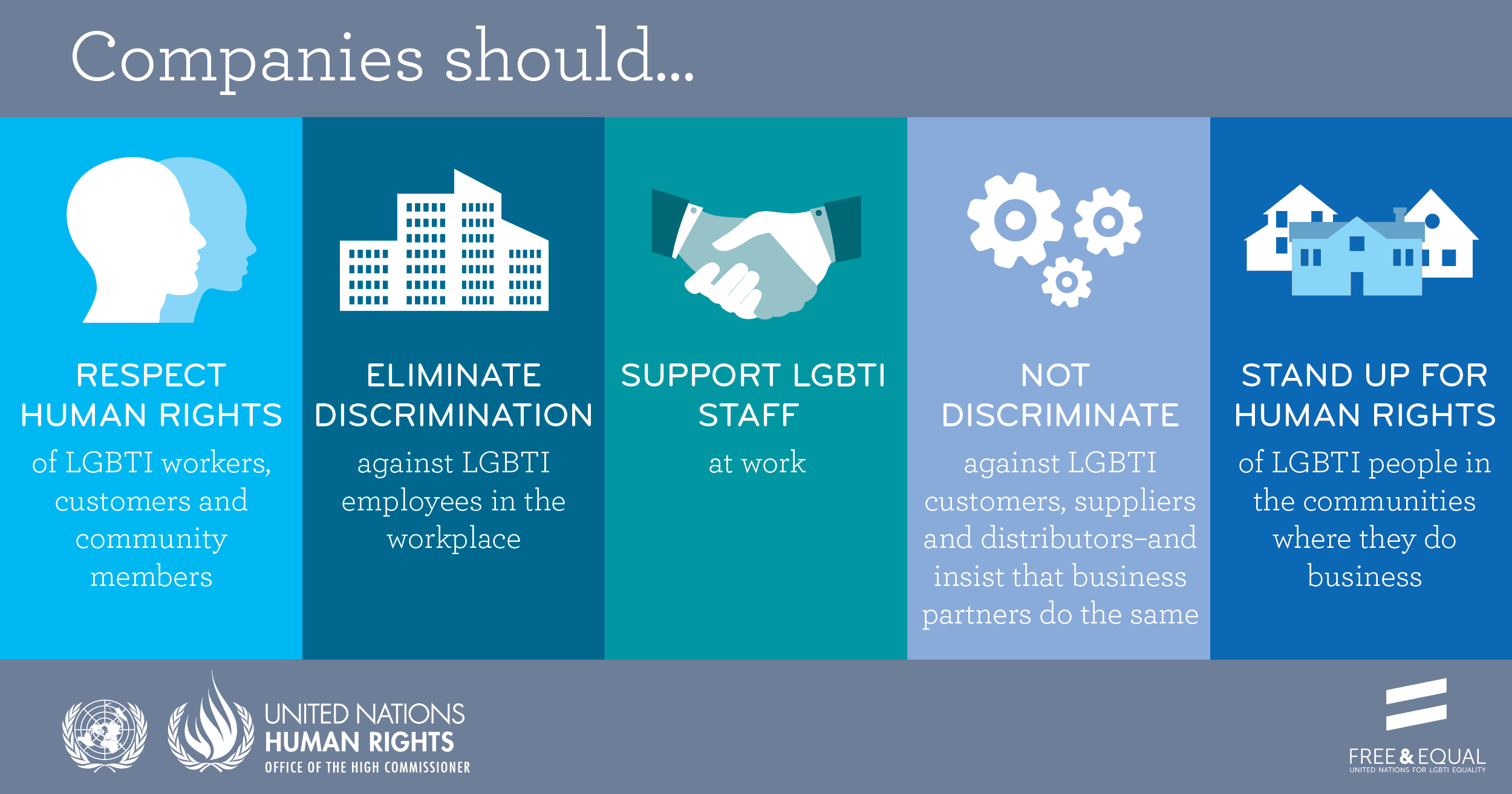
Companies cannot afford neutrality. Silence is complicity, and companies have human rights responsibilities regardless of whether national governments fulfill them. To resist, they must embed human rights due diligence throughout their supply chains, speak out when fundamental rights are undermined, and collaborate with civil society, not just in markets where it’s easy, but especially where it’s risky. The UN LGBTI Corporate Standards of Conduct, which I co-wrote in 2017 when I was at the UN in the Office of the High Commissioner on Human Rights, and are part of the international human rights framework – offer a roadmap: respect, support, act. That’s the minimum.
Top Insights
- DEI Backlash: Why Some Brands Survive and Others Get Burned
- Why AI Privacy Should Be Every Communications Leader’s Top Priority
- Amazon’s 5-Day Office Mandate: Will It Pay Off or Backfire?

What role should large corporations play in advancing LGBTQ+ rights?
Corporations are no longer just economic actors – they’re geopolitical actors with influence that rivals states, think of Google, Amazon, or Microsoft. It’s weird for them to say, “What happens outside our walls is none of our business”. LGBTQ+ people are criminalized in 66 countries. How can you employ LGBTQ+ people, sell them products, expect to invest in your companies, and disassociate yourself from their liberation movement? It’s like making money in apartheid South Africa: you have to do something. In the face of shrinking civic space and political rollbacks, these mammoth companies often have more leverage than foreign ministries.
I’ve seen how companies can use soft power to pressure governments, shift norms, and protect vulnerable communities. They did it in Singapore or Uganda. But they must do so with humility – aligning with grassroots movements, not overshadowing them. Authentic leadership today means moving beyond rainbow logos and towards sustained advocacy, responsible policy alignment, and investment in LGBTQ+-led institutions. Companies that supported the UN Standards of Conduct for Business embraced that challenge.
Sadly, some reneged on their commitment as soon as the political wind changed. Ultimately, it is about a company’s values and having a North Star – that’s not the case for the Anheuser Busch of this World – but other companies play the long game.
Latest MAPS Interviews
- Hear what David Shiffman thinks is the one question every CMO should ask themselves.
- Discover which brand’s approach to marketing and communications still inspires Orli LeWinter.
- Find out what Jake Beniflah thinks the biggest mistake is that brands make when trying to engage multicultural audiences.


How do DEI efforts for LGBTQ+ employees differ across regions, particularly in the US, compared to other parts of the world?

The U.S. remains both a vanguard and a battleground. While many companies are headquartered here and, at least for some, still model best practices domestically, they often remain silent abroad. That contradiction – robust DEI at home, risk aversion abroad – is untenable. LGBTQ+ employees in Nairobi, Manila, or São Paulo deserve the same dignity as those in New York. Yet, risk assessments, cultural relativism, and legal uncertainty often inhibit parity.
That’s why we developed the UN Standards with regionally grounded consultations. One-size-fits-all doesn’t work – but inaction is worse. It’s time for multinationals to stop hiding behind local context and be consistently brave. My boss at the UN, Kate Gilmore, used to start meetings with companies by saying, “With the privilege of making profit comes great responsibility”. Not a narrative that is popular these days in the U.S. But denying these responsibilities is a slippery slope. Imagine if companies started saying, “Human trafficking, forced labor, and child labor are not our business; our only responsibility is to maximize shareholder return.” It would not go well.
What has been the defining moment of your career, and why?
After 14 years, in 2016, I left the World Bank after a public fallout with the President over ethical issues (see Foreign Policy article). It was a difficult period. I had small children, split from their other dad, and the fallout took a toll on my well-being. After surviving that period, I lost many of my professional and economic security fears. It freed me.

But before that, I had realized that the change I wanted to see wouldn’t come from institutions alone. After years at the World Bank and the UN, I came to understand that we LGBTQ+ people were still guests – invited, but not in charge. Founding Koppa, the LGBTQI+ Economic Lab in 2024, and the Association of LGBTQ+ Corporate Directors in 2022 has been my response.
I believe in some level of sovereignty for LGBTQ+ people – economic, political, and cultural. We must be prepared to build our own when institutions falter or retreat. That shift in mindset – from advocacy within to construction outside – has shaped my journey.
The MAPS Newsletter
Sign up today for exclusive MAPS insights and interviews like this in your inbox as soon as they’re published.

How do you see the corporate landscape evolving regarding inclusivity over the next decade? What changes do you hope to see?
I see a bifurcated path. On one hand, some companies will retreat, scared by political backlash and performative threats. On the other hand, the leaders who truly walk the talk will double down on inclusion, not just because it’s ethical but because it’s existential and frankly it’s good business. Any conversation with a Gen-Z consumer and possible investor will confirm that. That’s why you can observe that companies in the culture business are doubling down on inclusion.
In 2023, I wrote, “This is not the end of inclusion, it’s the end of inclusion amateurism”. I still believe it. But, the next decade must be about institutionalizing queer power: LGBTQ+ entrepreneurs building wealth, LGBTQ+ people represented in boardrooms, and LGBTQ+ jobs… we need a lot of LGBTQ+ jobs. I hope we stop limiting ourselves to asking to be included and start designing the systems ourselves. The future is queer sovereignty, not just queer survival.
Where to find Fabrice: