
What has been the most significant change in consumer behavior in the last 10 years, and how has it impacted the way you think about marketing and communications?
Brand fragmentation. The 1990s and 2000s saw big brands consolidate their market share as they pushed into new markets (‘The Wild East’) following the end of the first Cold War, and as some developing markets achieved middle income status. Following the global financial crisis (2007-09) two things started to happen. Commodity price volatility and greater retailer consolidation forced CPGs to seek new ways to drive profit margins, and typically in ways which undermined consumer confidence in their brands (‘shrink-flation,’ supply chain changes, recipe changes etc.). Consumer brand loyalty started to break down and at the same time new ’boutique’ offerings started to come onto the market at the higher end that offered better quality (while quality declined among the major brands mid-market) while at the lower end much more competitive and higher quality low-margin scale offers came onto the market. At the same time value (Aldi etc.) and online (Amazon) retailers challenged major retailer dominance (whose margins declined from ~5 or 6% down to 1 or 2%). Major CPG somewhat started to run out of ideas, except to consolidate and try to drive innovation through brand combinations, and they started to buy up the boutique offerings. Consumers meanwhile became entirely focussed on value. This has become an even greater focus since the inflationary spikes which followed the pandemic 2022-23.
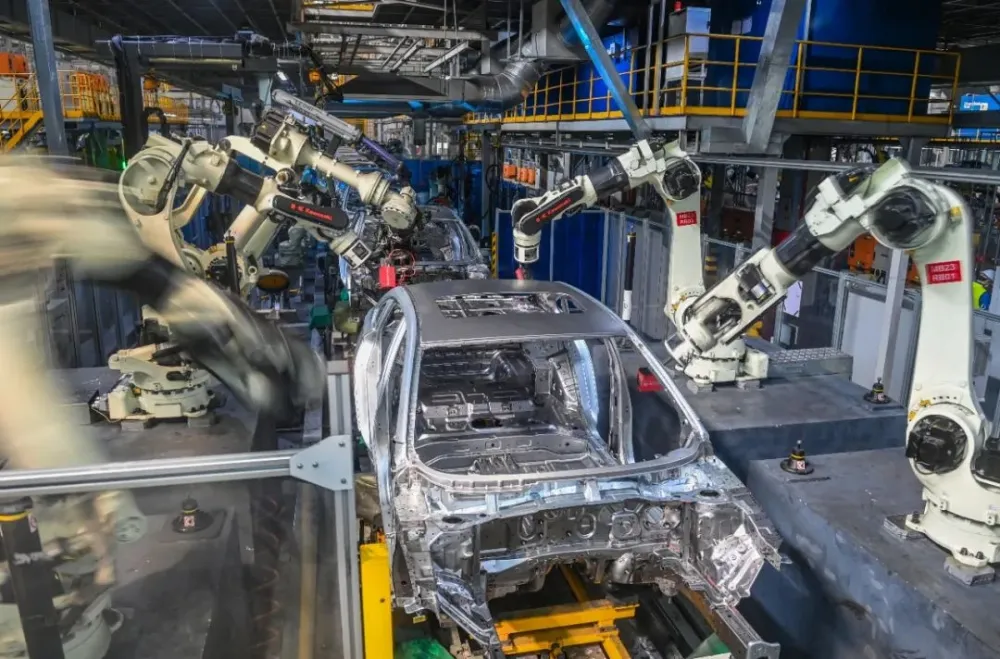
In non-CPG brands, it’s also interesting to see the breakdown of consumer loyalty to major brands. Take automotive. While you should never write off the German car brands, BMW, Mercedes and VW (at all ends of the market) are going to be tested by Chinese manufacturers in ways that would have seemed unfathomable a few years ago. They (and the German government more broadly) are caught up in their own Faustian pacts as they do JV deals to take advantage of the Chinese EV ecosystem dominance, and then end up asking EU governments not to impose tariffs on Chinese EVs even though these products will undercut their own brands. Gens Y & Z aren’t even convinced of the need to own cars, let alone have any loyalty to these brands which face a pernicious crisis as their average-age loyalty moves through age 70 and 80. Meanwhile the value brands (e.g., Stellantis ones) face extinction. This continuing fragmentation of consumer brand loyalty (if that even exists anymore) will test marketing and communications. The push back to this will be the ever more protectionist stances of governments that seek to protect ‘national champions’ and sectors. But if the product is seen as increasingly inferior (BYD vs BMW) then how do marketing / comms folks manage that? You can put lipstick on a pig, but its still a pig and the consumer will vote with their feet.
Latest MAPS Interviews
- Learn what inspired Chris Bacon about targeting 1 billion consumers.
- Discover Idil Cakim‘s ‘lightbulb’ moment around word of mouth marketing.
- Find out how Rick Bruner thinks marketing leaders can start impacting climate change.

What do you read, listen to, or watch to keep track of developing issues and consumer dynamics?I tend to be more focussed on understanding the macro geopolitical and geoeconomic trends, but it’s interesting to see how these play out at a micro level on brands. So while I have a diet of the FT (now actually making money!), Bloomberg, The Economist, Foreign Affairs etc. and a plethora of podcasts in the geopolitical space, I ask my teenage daughters what’s going on in their world to get a feel for what they see. As far as I can tell, the brands that have been most successful are those that aggressively use social media (like Sephora etc.) while many of the mainstream brands are dying on their arses and missing out on generational brand conversion. This doesn’t seem to be recognised in valuations yet, partly because the Magnificent 7 are so distorting market perceptions. It will be interesting to see how exposed they are if (when?) there is a market correction in the next cycle.
Has there ever been an issue, trend or dynamic that you thought was going to be bigger than it turned out to be?

Having worked in CPG, I’ve seen a lot of guff as brands attempted to find ways to stay relevant and engage consumers. Sometimes this led to running down rabbit holes or jumping on the latest fad, or missing it entirely. I haven’t seen a huge amount of genuine or unique new creativity for a while. Showing my age here, but the most innovative ads I remember were a bunch of old surfers or a drumming gorilla, and as far as I can tell, no one really knew why they worked. Now, when I walk through airports or look at billboards, I just see the same stuff that’s already been recycled 10 times. I think it will be interesting to see how companies and brands navigate issues like ESG and DEI which dominated 2020-23, but for which there is a real sense of a turn or move on to a different emphasis. This doesn’t mean they will just dump them as a focus, but as we see increased turbulence in the world, demographic change and regionalisation, they might prioritise focus into other areas in response to consumer concerns.
Can you give an example of a marketing or communications strategy from a different sector that inspired you at some point during your career?
Not really, but I might be a bit too cynical to ask!
Contact MAPS today for your free Snapshot
The Snapshot will quantify how you are perceived in comparison to your competition on one of today’s fast-moving issues. This service is limited to just a handful of organizations each week, so leave your details now and we’ll be in touch.
What has been the defining moment of your career, and why?

The boring answer: creating two strategic plans for managing global public and government affairs for three huge multi-national organisations operating from the US to Ukraine. The more interesting one: working as part of a team to prevent our entire Russian management team being arrested including with a bunch of ex-MI6 spooks to understand how to manage around the developing Putin kleptocracy. Managing major geopolitical and security challenges like this will now become the norm.
Looking into the future, which fast-moving issues and and consumer dynamics will marketing and communications leaders need to be aware of?
Geopolitical turbulence, global fragmentation into regions (already well on its way), and consumer rejection of identity politics. I think the most interesting one is demographic change. It will at first happen slowly, but to borrow a metaphor from climate change, you might not notice the glacier melting but when it has, even partially, huge changes will have already happened. After reaching peak-baby in 2012, we don’t have an economic model currently designed for an economy where there are fewer and fewer working-age consumers, which have previously been the engines of growth since the industrial revolution. AI will surely bring profound systemic changes to the world, much like the widespread take up of the internet did ~25 years ago. But the most profound change was the mobility of connectedness and utility created through smart devices which didn’t happen at scale till much later. At the moment there is a lot of banal clickbait, speculation and doom and gloom which isn’t especially helpful. For sure there will be huge changes, some which will drive systemic changes and offer opportunities we haven’t even spotted yet, but there remains a problem. Bots don’t buy things. I would also advise keeping an eye on what’s happening in the commodity markets. This is where the very real economy plays out, and stories of why the oil price is nailed to $70, or why cocoa futures are up 307% in just under two years tell you a lot more about what’s actually going on in the world.
What one piece of advice would you share to those starting their career in marketing and communications?
Keep stepping back and take a view of the big (macro) picture, otherwise you will just chase the same s**t everyone else is.
Top Insights
- Which initiatives are moving the needle for the 20 companies with the strongest reputations around LGBTQ+ Rights?
- How does Amazon’s reputation around return to office compare to Microsoft’s among tech-savvy consumers?
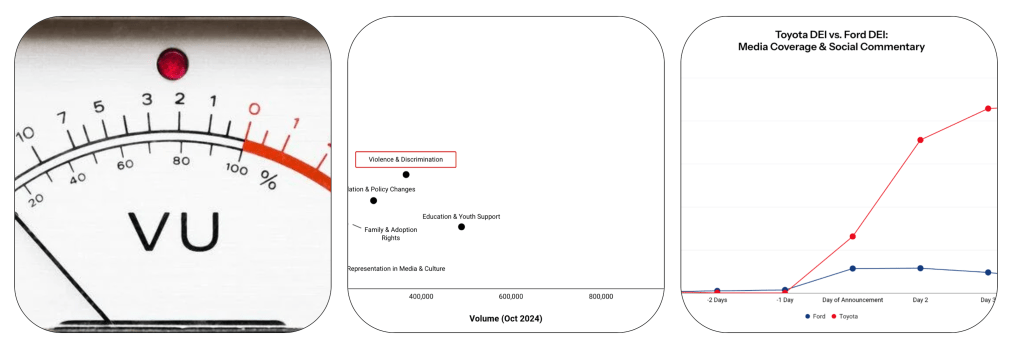
- Is discussion of Harley-Davidson’s and Ford’s DEI changes taking place in the same places online – and why does this matter?
Where to find David: