Social vs. Mainstream
Earlier this week MAPS looked at the scale of the reaction to Harley-Davidson and Ford’s recent Diversity, Equity and Inclusion (DEI) announcements. From a communications perspective, it’s also important to understand where that reaction came from and whether this differed for the two corporations.
Latest MAPS Interviews
- Learn why bricks and mortar are still important for Cenk Bulbul.
- Which brand’s approach to marketing and communications still inspires Orli LeWinter?
- Find out what pushed Alex Kantrowitz to make a career pivot and to start Big Technology.

Social Media Takes the Wheel for Harley-Davidson
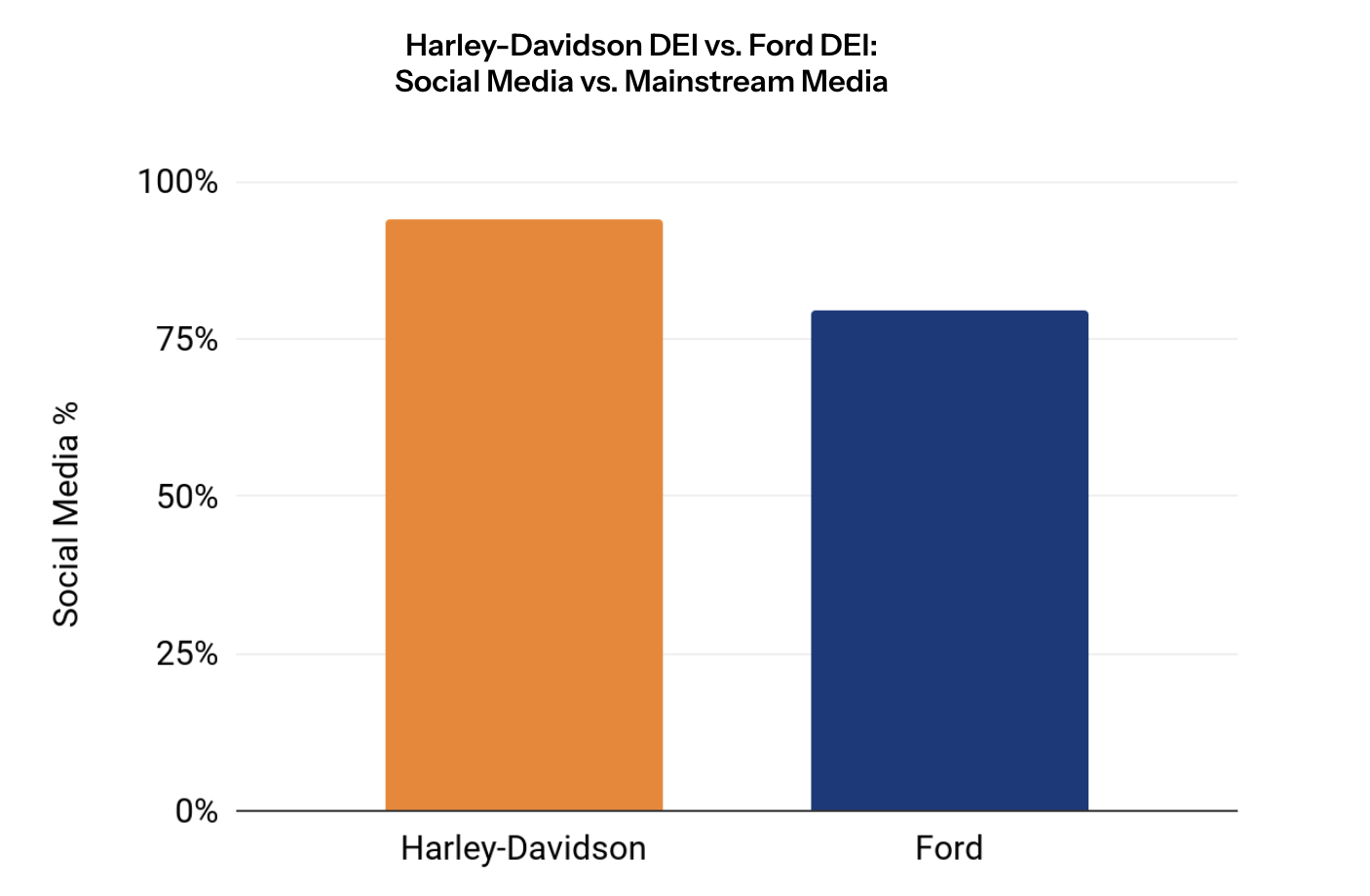
94% of the online reaction to Harley-Davidson’s news came from social media, with conservative voices driving the conversation and celebrating a retreat from what they see as progressive corporate policies. One challenge for any brand in a similar situation is that while short-term momentum is created within certain communities – and market segments – it also risks cementing a polarized brand image, which could create long-term challenges in appealing to more diverse audiences.
Contact MAPS today for your free Snapshot
The Snapshot will quantify how you are perceived in comparison to your competition on one of today’s fast-moving issues. This service is limited to just a handful of organizations each week, so leave your details now and we’ll be in touch.
Ford: More Mainstream, Less Viral
Ford’s DEI news saw only 79% of online reaction coming from social media, with 21% coming from mainstream news outlets online. This suggests that Ford’s approach – a reframing of its DEI efforts rather than a total shutdown – didn’t provoke the same visceral reaction. In parallel, Ford’s broader customer base and the fact that the Ford news surfaced through internal communications likely helped turn down the temperature of the reaction. Offsetting this, however, mainstream coverage can lead to deeper scrutiny and analysis than just quickfire, emotionally charged responses on social media. This can prolong the news cycle and increase visibility of the issue among a broader audience.
Top Insights
- Which initiatives are moving the needle for the 20 companies with the strongest reputations around LGBTQ+ Rights?
- How does Amazon’s reputation around return to office compare to Microsoft’s among tech-savvy consumers?
- Which LGBTQ+ Rights issues are the fastest-growing right now?
Activist Influence
It’s important to note the role of activism in both stories; Harley-Davidson appeared to directly respond to pressure from conservative voices, which amplified the perception that this was a political statement – a victory for critics of DEI. Ford, however, seemed less reactive to that pressure, resulting in a less dramatic response. This is a crucial point for communications leaders; being perceived as reactive to activist pressure – especially in today’s politically charged environment – can significantly shape public perception and cast longer-term aspersions on a corporation’s authenticity when it comes to social issues.
Next Steps
Contact us today for your free MAPS Snapshot, quantifying how you are perceived in comparison to your competition on LGBTQ+ Rights.