A Foundation for Strategy
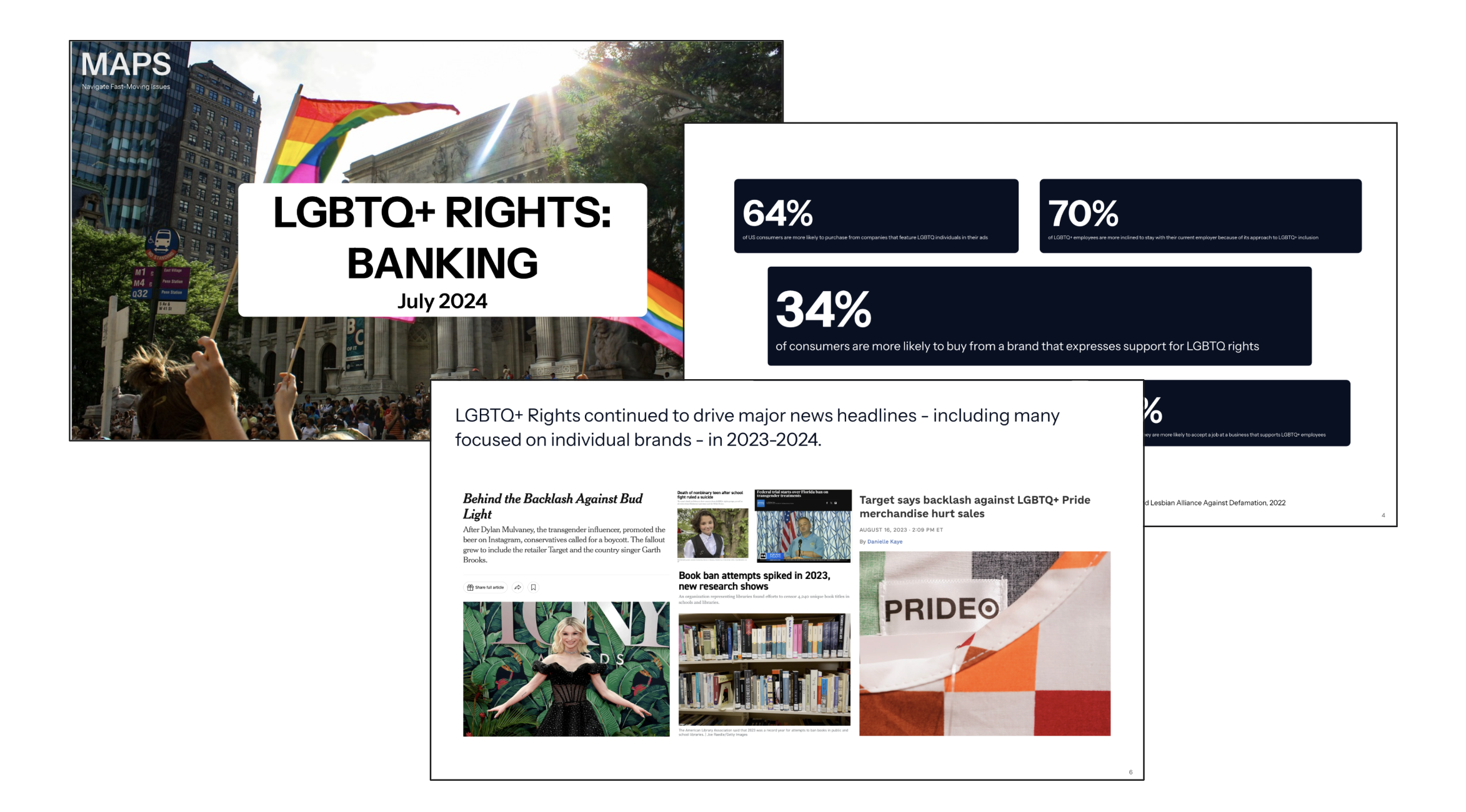
In recent years, the landscape of LGBTQ+ rights and representation has seen significant evolution in media coverage and social media commentary. For the C-suite, understanding the ebb and flow of LGBTQ+ topics is vital; it helps them develop and refine corporate strategy and communications that resonate with their audience, showing a commitment to inclusivity and social responsibility.
Latest MAPS Interviews
- Learn why bricks and mortar are still important for Cenk Bulbul.
- Which brand’s approach to marketing and communications still inspires Orli LeWinter?
- Find out what pushed Alex Kantrowitz to make a career pivot and to start Big Technology.

The Data Breakdown
Let’s begin by examining the data on the volume of mentions for various LGBTQ+ topics. During 2023-24, Transgender & Non-Binary Issues emerged as the dominant theme, far surpassing other areas of discussion around LGBTQ+ rights.

The sheer volume of discussions centered around Transgender & Non-Binary Issues is striking, accounting for nearly 18 million mentions during the 12-month period. This is more than double the volume of the next most discussed topic, Education & Youth Support, which accounts for almost 7 million mentions. Other significant areas of focus include Violence & Discrimination and Legislation & Policy Changes.
Contact MAPS today for your free Snapshot
The Snapshot will quantify how you are perceived in comparison to your competition on one of today’s fast-moving issues. This service is limited to just a handful of organizations each week, so leave your details now and we’ll be in touch.
Why Transgender & Non-Binary Issues Dominate
There are several high-profile drivers of the dominant focus on transgender and non-binary issues:
- Gender-Affirming Care:
- Coverage of a US appeals court ruling banning gender-affirming care for minors in Tennessee.
- Florida’s restrictions on gender-affirming treatment for adults.
- Hate Crime:
- Coverage of the first federal conviction for a hate crime motivated by gender identity.
- School hate crimes reported to police doubling in recent years – particularly stark in states with more restrictions around rights and the freedom of teachers.
- The tragic death of non-binary Oklahoma teen Nex Benedict, who was found to have committed suicide the day following an altercation with fellow school students.
- Boycotts:
- The financial impact on AB InBev of conservatives boycotting Bud Light after the beer brand collaborated with transgender personality Dylan Mulvaney in 2023.
- Key Events:
- President Biden recognizing International Day Against Homophobia, Transphobia and Biphobia and its importance as “a matter of human rights.”
- Justin Trudeau and others marking Transgender Day of Remembrance.
- Athletics:
- Efforts to persuade the NCAA to continue allowing transgender athletes to compete in women’s events.
Top Insights
- Which initiatives are moving the needle for the 20 companies with the strongest reputations around LGBTQ+ Rights?
- How does Amazon’s reputation around return to office compare to Microsoft’s among tech-savvy consumers?
- Is discussion of Harley-Davidson’s and Ford’s DEI changes taking place in the same places online – and why does this matter?

Implications
For those corporations developing corporate and communications strategy to include support for the LGBTQ+ community, understanding what’s driving media coverage and social commentary is crucial. It is also important to consider which areas are more polarizing, and how perceptions vary by key audiences, in order that efforts are aligned with marketing strategy. Armed with this understanding, leaders can use the information to:
- Advocate for Inclusive Policies and Support Initiatives:
- Internal Policies: Ensure that company policies support gender-affirming care and inclusive healthcare benefits for all employees. Advocate for inclusivity within the organization by implementing comprehensive non-discrimination policies and providing resources for transgender and non-binary employees.
- External Advocacy: Publicly support legislative efforts that protect transgender and non-binary rights. Engage in advocacy campaigns that highlight the importance of gender-affirming care and oppose discriminatory policies, such as the restrictions in Tennessee and Florida.
- Promote Awareness and Education:
- Employee Training: Implement training programs to educate employees about transgender and non-binary issues, including facing challenges such as hate crimes and the impact of discriminatory practices.
- Public Campaigns: Launch awareness campaigns that highlight key events and milestones, such as Transgender Day of Remembrance and International Day Against Homophobia, Transphobia, and Biphobia.
- Engage in Responsible Marketing and Partnerships:
- Supportive Marketing: Make sure that collaborations and endorsements align with the company’s values around inclusivity and support for the transgender community.
- Strategic Partnerships: Partner with organizations that advocate for transgender and non-binary rights. Support community events and initiatives that promote equality and provide resources for those affected by discrimination and violence.
By taking these steps, business and communications leaders can not only align their strategy with the current social landscape but also play a significant role in advancing the rights and well-being of transgender and non-binary individuals.
Next Steps
Contact us today for your free MAPS Snapshot, quantifying how you are perceived in comparison to your competition on LGBTQ+ Rights.